The Geirangerfjord, explained — a local’s complete guide
Geiranger has one pier, one church, and about 250 of us who stay through the winter. I have been answering questions on that pier since I was summer crew on the sightseeing boats. This is the long version of what I tell people who ask which boat to take.
Planning your fjord day?Summer departures sell out days ahead, and cancellation is free up to 24 hours before. Reserve a spot now, decide later.
Check availabilityHow the fjord works
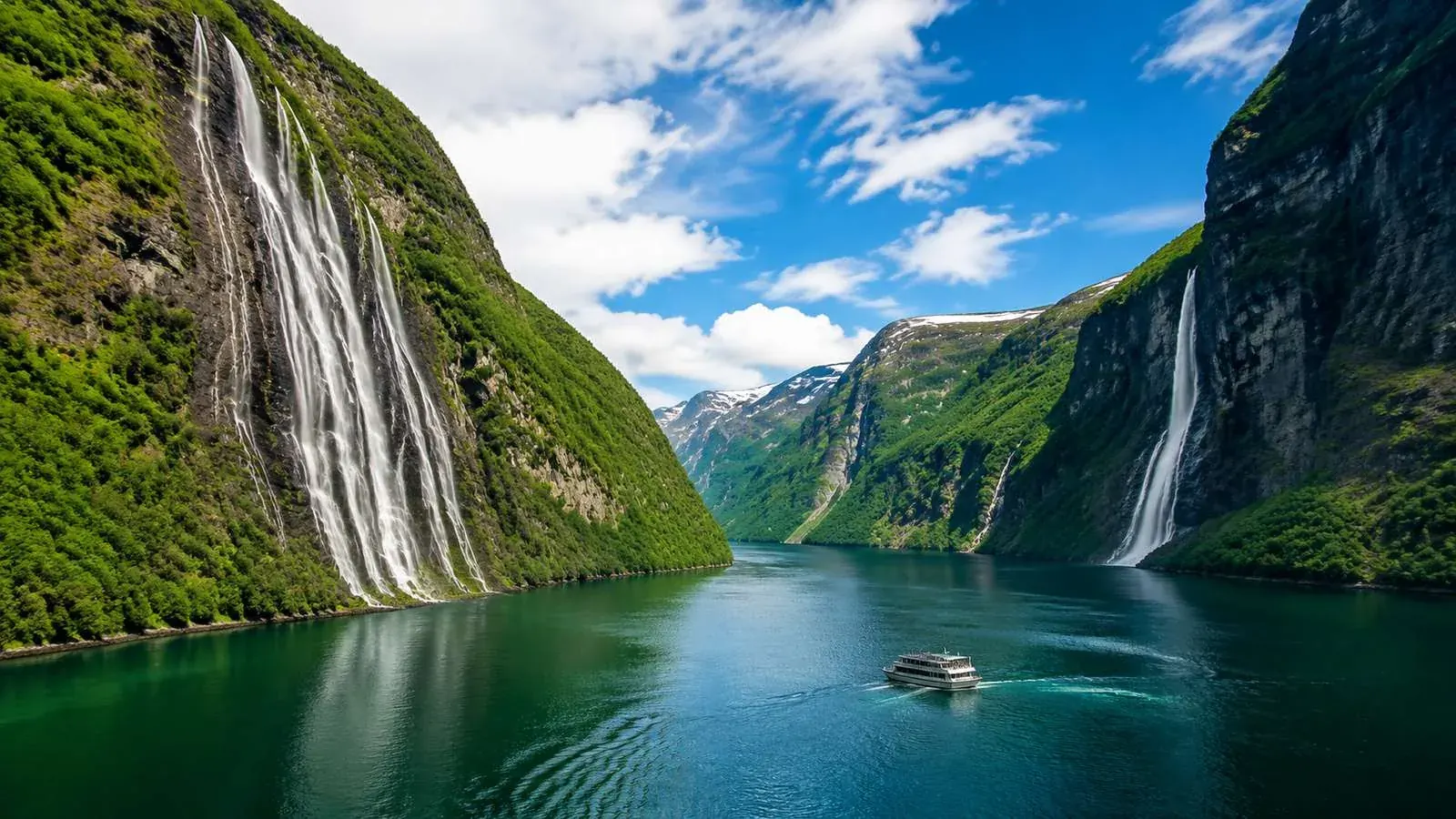
The fjord is about 15 km long and shaped like an S, the innermost branch of the Storfjord system before the mountains close it off. There is no entry ticket; you pay for a boat, never for the water. In season the sightseeing cruises leave the pier behind the Tourist Information roughly every hour, and the RIB departs about ten past the hour from the old boathouse a hundred metres along the shore. Sightseeing boats sail all year. The full programme — RIB safari, waterfall tasting, the Ålesund round trip — runs from May to September.
The five-boat decision
From Geiranger itself, the classic cruise comes in two forms: 75 minutes on a traditional vessel, or two hours on the silent hybrid-electric boat. Pay for the two hours. The shorter boat gets crowded when the cruise ships are in, and its reviews say so plainly; the hybrid boat reads better in every respect. The RIB is a different animal — twelve seats, goggles and a life jacket provided, and the skipper takes you into the spray below the Seven Sisters and under Skageflå. It is not for pregnant women or anyone with a bad back. Families tend to pick the waterfall-tasting catamaran, which stops at the Friaren so you can drink straight from the fall; children remember that longer than any commentary. Staying in Ålesund without a car, the full-day hybrid-electric round trip does the entire journey by boat, 7 to 9.5 hours through three fjords with about three hours free in the village. And if there are up to five of you, the private day trip adds a driver, the Eagle Road and both ferry crossings; it costs a multiple of the shared boats, but it divides by five. All of them sit side by side on the all-tours page, and what actually moves the price is on the cost page.
2026: the quiet fjord becomes policy
From 1 January 2026, Norway requires zero-emission operation for vessels under 10,000 GT in the World Heritage fjords, ours included. The local fleet was ready before the deadline; the hybrid-electric boats have been sailing here for years. Large cruise ships are exempt until 2032, when the government’s requirement covers all passenger vessels — so no, cruise ships are not banned, whatever you may have read, and more than 80 calls are still scheduled for Geiranger in 2026. What the rule confirms is what we have said on the pier for a long time: the small boats are the right way in, and now that is written into law with dates attached.
The free parts
Not everything here needs a ticket. The waterfall walk climbs 327 steps along the Storfossen from the village centre toward the Norwegian Fjord Centre, 20 to 30 minutes up at a sightseeing pace, and costs nothing — I have paced it out. Flydalsjuvet looks down on the village from the southern road; Ørnesvingen sits at the top of the Eagle Road’s 11 hairpins; Dalsnibba, at 1,476 m up a seasonal mountain road, is the high view. And the Hellesylt car ferry crosses the whole fjord in about 65 minutes from roughly March to October — the cheapest way onto the water, if you can live without the photo stops.
Booking, crowds and rain
Summer departures sell out days ahead, the twelve-seat RIB first. Every tour on this site cancels free up to 24 hours before departure, so the sensible move is to book early and decide later; the availability widget above shows live departures. About the crowds, honestly: with 80-plus ship calls scheduled for 2026, a two-ship day fills the village from mid-morning to mid-afternoon. Take the first or last departure, or come in May or September, when the water is just as deep and the queue is not. As for the weather — western Norway earns its reputation, and autumn is the wettest stretch. Pack a rain shell in any month, and remember that rain means fuller waterfalls. The month-by-month picture is on the best-time page.
If you keep one line from all of this, keep this one: get yourself to Geiranger or Ålesund, get onto a small boat, and give the fjord two hours. It does the rest.
Ready to book?
Departures are listed live below — summer slots go days ahead, and cancellation is free up to 24 hours before, so reserving early costs nothing but a decision. For the full comparison, start with all five tours or the best-way breakdown.
Frequently asked questions
How long should I plan for the Geirangerfjord?
One full day covers a boat trip, the waterfall walk and a viewpoint. With two days you can add the Skageflå hike and the quieter evening hours after the ships leave.
Do I need to book fjord tours in advance?
In July and August, yes — a few days ahead for the small boats, which sell out first. Cancellation is free up to 24 hours before departure, so booking early carries no real risk. Check dates on the tour list.
Is the Geirangerfjord doable without a car?
Yes. The full-day boat round trip from Ålesund needs no driving at all, and inside the village everything is walkable from the pier.